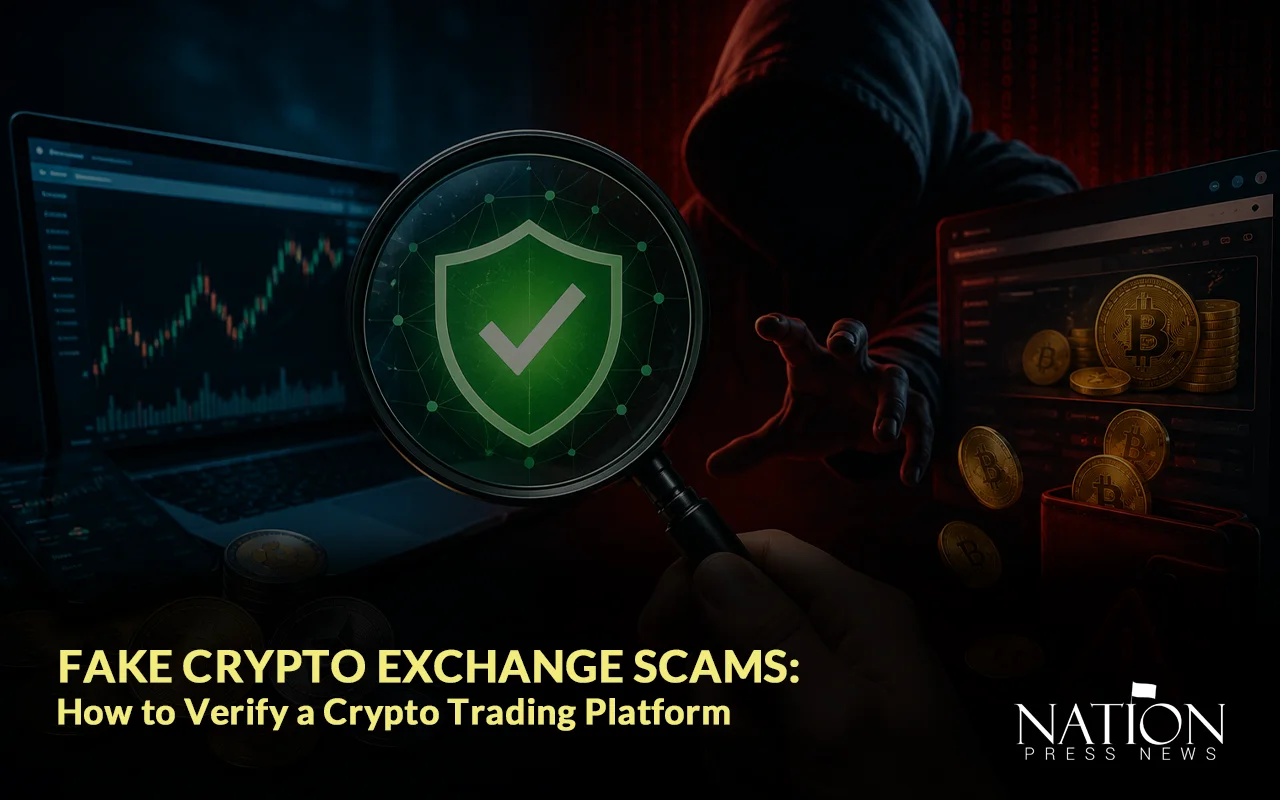
Fake Crypto Exchange Scams : How to Verify a Crypto Trading Platform
A friend of mine lost $4,000 in roughly three weeks a few years ago. Not to a hack. Not to a market crash. He deposited money into an exchange that looked completely legitimate- clean interface, working charts, a support chat that responded fast- and then one day, he couldn’t withdraw. The chat went quiet.
After a week, the website disappeared. Since the domain redirected to a blank page by the time he went looking for answers, he is still unsure of the platform’s exact name.
This happens constantly. Fake crypto exchanges have gotten really good at mimicking the look and feel of real ones. So if you’re putting money into any trading platform, a little scepticism up front can save you a lot of grief later. Here’s how to actually check whether one is legit.
Start with the registration, not the reviews
Every real exchange operating legally has to register somewhere. In the US, that’s typically FinCEN as a money services business, plus state-level money transmitter licenses. If a platform can’t point you to where it’s registered or the registration number doesn’t check out when you search the regulator’s actual database, that’s not a minor red flag.
That’s the whole ballgame.
Don’t just trust a badge on their homepage. “FCA Regulated” is a logo that anyone can put in a footer. Check to see if the firm name appears by going straight to the regulator’s website and searching for it. Don’t just trust a badge on their homepage.
Check How Old the Domain Is
This one’s almost too easy, and yet most people never bother. You can find out when a domain was registered with a simple WHOIS search. If an exchange claims to have “processed over $2 billion in trading volume since 2019’ but the domain was registered four months ago, you already have your answer. Scammers rotate domains often, sometimes cloning the design of a shut-down site and relaunching under a new name within days.
Check if withdrawals actually work with a small amount first
This is the test that catches almost everything else. Deposit a small, manageable sum. Trade with it a little if you want to feel out the platform. Then withdraw it. Not the profits; the actual test is whether any money comes back out, and how much friction there is getting it there.
Real exchanges process withdrawals in a matter of hours, sometimes minutes, sometimes with a short delay for security review. Fake ones tend to introduce sudden “verification” hurdles the moment you try to pull funds out: a tax that must be paid first, an account upgrade fee, a compliance hold that requires another deposit to release.
If a platform ever asks you to pay money to release your own money, walk away. That’s not how legitimate finance works, anywhere.
Read the liquidity, not just the price chart.
A surprising number of fake exchanges fake their order books. Prices move, charts animate, but there’s no real matching engine behind it; you’re trading against a script, not other users.
One way to sniff this out: place a limit order slightly off the current market price and see if it behaves the way you’d expect on a real exchange, with actual depth on both sides of the book.
If the order book looks suspiciously symmetrical or the spread never changes no matter what you do, something’s off.
Search for the founders, not just the company.
Legitimate exchanges usually have identifiable leadership people with LinkedIn histories, prior companies, sometimes conference talks or interviews. Scam platforms tend to have anonymous teams, or worse, fabricated ones with stock photos and made-up bios.
Reverse image search the “team” photos on a platform’s about page sometimes. It’s genuinely eye-opening how often you’ll find the same headshot used by three unrelated companies.
Trust your gut on the pressure tactics
Real financial platforms don’t need to pressure you. If a platform is pushing urgency “limited time bonus,” “your account will be frozen if you don’t verify in 24 hours” constant messages from an “account manager” nudging you to deposit more, that’s a behavioural pattern, not a coincidence. Scammers rely on urgency because it short-circuits the part of your brain that would otherwise ask obvious questions.
None of this is complicated. It just takes ten extra minutes before you deposit real money: check the registration, check the domain age, test a small withdrawal, and pay attention to how the platform talks to you. The exchanges worth using won’t mind you being careful. The ones that do mind are usually the ones you should be most careful of.