Investment Platforms Delaying Withdrawals? How to Tell if It’s a Scam or a Legitimate Issue
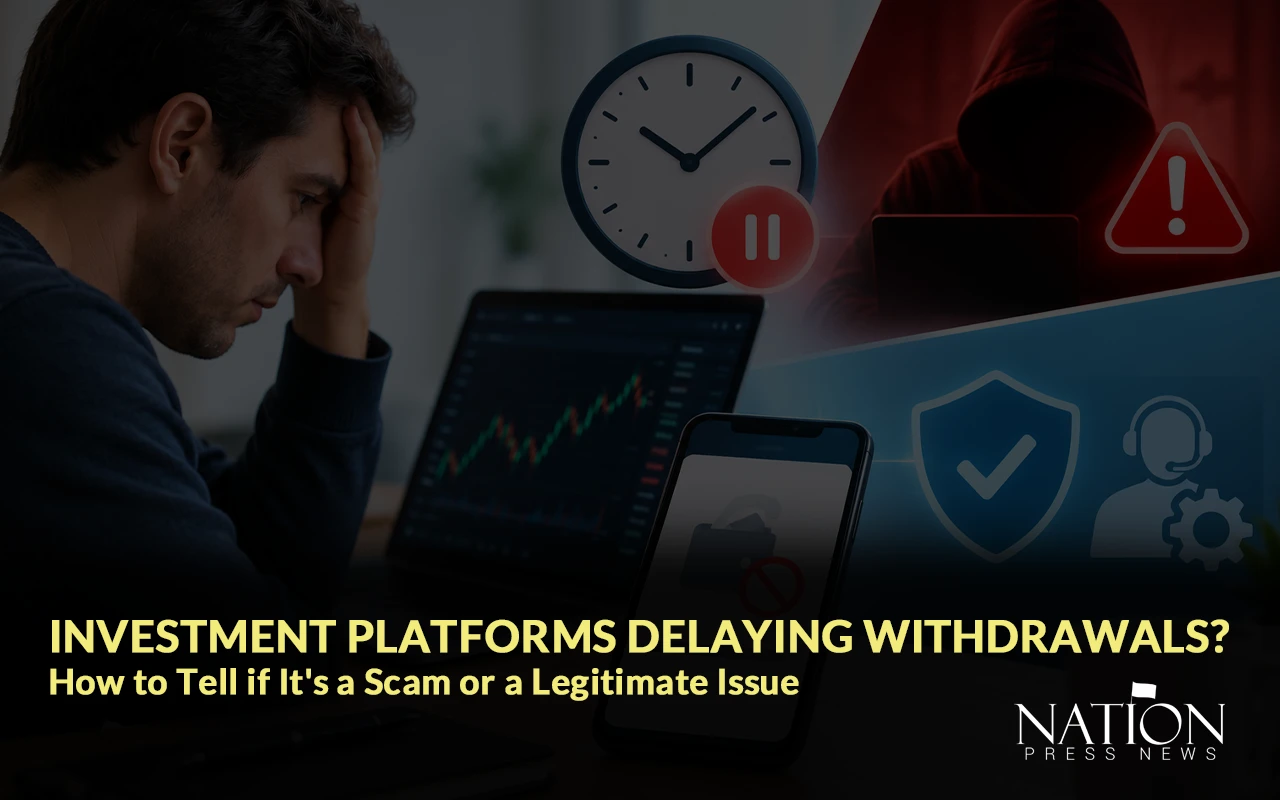
Your withdrawal request has been “processing” for four days. Support keeps saying it’s almost done. Is that normal, or is this the moment before everything disappears?
Delays Happen. Even Real Ones.
Not every slow withdrawal is a red flag. Banks have cutoffs. Brokers run compliance checks. Some platforms genuinely process large withdrawals in batches, especially at month-end or during high-volume trading days.
So the panic you feel the second a payout doesn’t land instantly? Understandable, but not always accurate.
The problem is scammers know this too. They’ve built entire playbooks around mimicking “normal” delays just long enough to keep you calm while they quietly disappear.
Why Withdrawal Delays Are the Classic Scam Move
Here’s the thing about fake investment platforms: they never stop you from depositing. Money in is instant. Money out is where the story changes.
That asymmetry is the tell. A legitimate broker processes deposits and withdrawals through roughly the same rails, so if getting money in takes seconds and getting it out takes a “review team” three weeks, something’s off.
Scam platforms lean on a few tricks to buy time:
The mysterious fee. Suddenly you owe a “tax,” a “liquidity fee,” or an “unlocking charge” before your funds can move. Real platforms don’t invent new fees the moment you try to cash out.
The endless verification loop. You submit your ID. Then a second form of ID. Then a utility bill. Then something else. Each round resets the clock and buys the scammer another few days.
The vague support script. “Your request is being reviewed by our finance department” is a sentence that means nothing and can be repeated forever.
The sudden system upgrade. Withdrawals are paused because of “maintenance” that never seems to end.
None of these is proof on their own. But stack two or three together, and you’re not looking at a delay anymore.
What a Genuine Delay Actually Looks Like
Real platforms are usually upfront about timing before you ever ask. They publish processing windows, they explain cutoffs, and support gives you specifics- not vague reassurance, but an actual date or reference number.
You’ll also notice something else: a legitimate platform doesn’t ask you to pay to receive your own money. Ever. If withdrawing your funds requires you to send more funds first, that’s not a delay. That’s the scam finishing itself.
How to Actually Check
You don’t need to be a financial expert to sort this out. A few checks go a long way.
Look up the name of the platform with “withdrawal” connected. You’ll know the answer if dozens of others are telling the same narrative about your current situation.
Check regulatory registration. Most legitimate brokers and platforms are registered somewhere- SEC, FCA, ASIC, or your country’s equivalent. No registration, no protection, no real oversight.
Take note of how they react to pressure. “What is the exact date my funds will arrive, and what’s my reference number?” is a direct question to ask.
A real support team gives you an answer. A scam gives you a paragraph.
Test with a small amount first, next time. If you’re evaluating a new platform, request a small withdrawal before depositing anything larger. If that small amount comes out clean and fast, you’ve learned something useful. If it doesn’t, you’ve learned something more important.
If You’re Already Stuck
Stop depositing more money immediately, no matter what reason they give you for needing it. Save every message, transaction ID, and screenshot you have. Then report it- to your bank if you paid by card, to the platform’s regulator if one exists, and to your local fraud reporting body either way.
Don’t go looking for a “recovery expert” who reaches out to you first. That’s usually the same scam wearing a different hat.
A Quick Gut-Check Before You Invest Anywhere New
Prevention is a lot less stressful than recovery. Before you commit real money to any platform, ask yourself a few plain questions. Can you find the company’s physical address and leadership, or just a logo and a chat widget? Do the “reviews” all read like they were written the same week, in the same tone? Is the person who brought you to this platform pushing you to move fast, deposit more, or keep quiet about it?
None of that requires special knowledge. It just requires slowing down long enough to notice the pattern instead of the pitch.
The Bottom Line
A slow withdrawal isn’t automatically a scam. But a withdrawal that keeps needing new fees, new documents, and new excuses- while deposits somehow never had this problem- isn’t a delay anymore.
Trust the pattern, not the promise. The platforms worth your money don’t make getting it back this complicated.