Profits Were Real on Screen, So Why Couldn’t You Ever Withdraw Them?
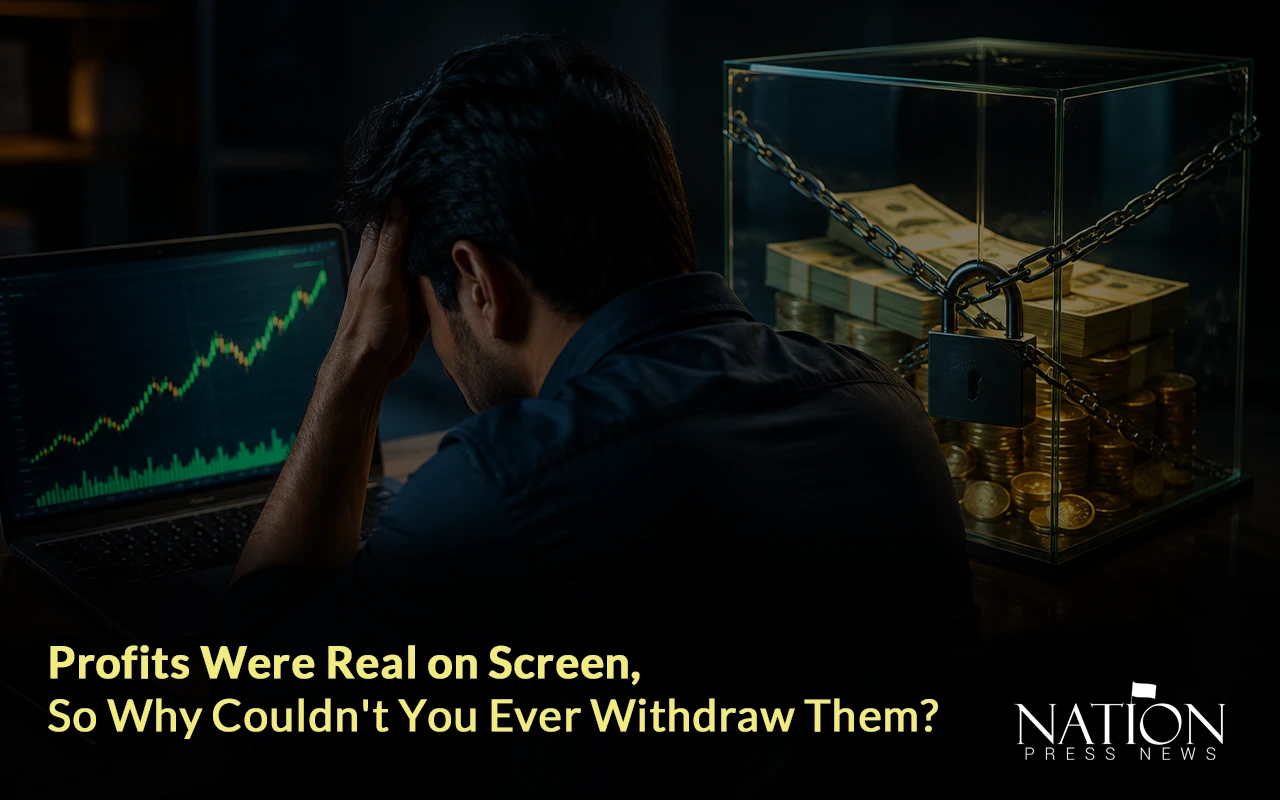
You watched the number climb. Every login, a little higher than the last. It felt real because on the screen, it was real. So why, the moment you actually tried to take it out, did everything suddenly stop working?
Here’s the uncomfortable answer: the number was never money. It was just a number.
A Dashboard Is Not a Bank Account
This is the part most victims don’t understand until it’s too late. A legitimate brokerage or exchange shows you a balance because that balance actually exists somewhere in a regulated account, tied to real assets, subject to real audits.
A scam platform shows you a balance because someone typed it into a database. That’s it. There’s no underlying trade. No real market positions. No actual crypto sitting in a wallet with your name on it.
The “growth” you saw was a number a developer coded to go up, usually on a schedule designed to keep you interested and, more importantly, to keep you depositing.
Why They Let You Win at First
Early on, plenty of victims do get a small withdrawal through. That’s not generosity; it’s bait. A $200 test withdrawal that clears in an hour buys enormous trust for very little cost.
Once you believe the platform works, you stop questioning it. You invest more. You tell a friend. You stop reading the fine print.
That’s the exact moment the platform stops needing you to win.
The Withdrawal Wall
So why can’t you get the money out later? A few things tend to happen, sometimes all at once:
- An unexpected “tax” or “verification fee” that you were not informed of beforehand occurs
- Your account gets flagged for “unusual activity” and needs a manual review that never finishes.
- Customer support goes from responsive to vague to completely silent.
- The site itself becomes unreachable, sometimes overnight.
None of these are real compliance steps. Real financial institutions don’t invent fees after your money is already locked in, and they definitely don’t require you to pay more money to access money that’s supposedly already yours.
Where the Money Actually Went
While your dashboard kept showing gains, your real deposits were already gone, usually converted into crypto and moved through several wallets within hours of arriving.
Investigators have traced cases like this before: one wallet receives the funds, splits them into smaller amounts, spreads them across other wallets, sometimes runs them through a mixing service to blur the trail, and eventually lands on an exchange where it gets converted to cash.
The dashboard you were staring at had nothing to do with any of that. It was a front end. The real transaction happened somewhere else entirely, without you.
Why This Matters If You’re Still In It
Don’t wait for help to “resolve” your withdrawal if you’re reading this because it just got stuck. That resolution isn’t coming. What matters now is documentation of every screenshot, every transaction hash, every message from your “account manager,” and speed.
Contact your bank if you paid by card or wire. If crypto was involved, save the wallet addresses immediately; blockchain records don’t disappear the way a scam website does.
The Real Lesson
A number going up on a screen tells you nothing about whether the money behind it is real. The only real test of a platform is whether it lets you take money out on your terms, not its own.
If a “final fee” ever stands between you and a withdrawal, that’s not a hurdle; that’s the whole business model.
The profits were never the point. Keeping you convinced long enough to deposit more always was.