Why Crypto Scammers Freeze Your Funds Under the Guise of “Risk Control”
You go to withdraw. Everything’s been fine up to this point. The dashboard’s been climbing, the advisor’s been friendly, the whole thing has felt, frankly, exciting.
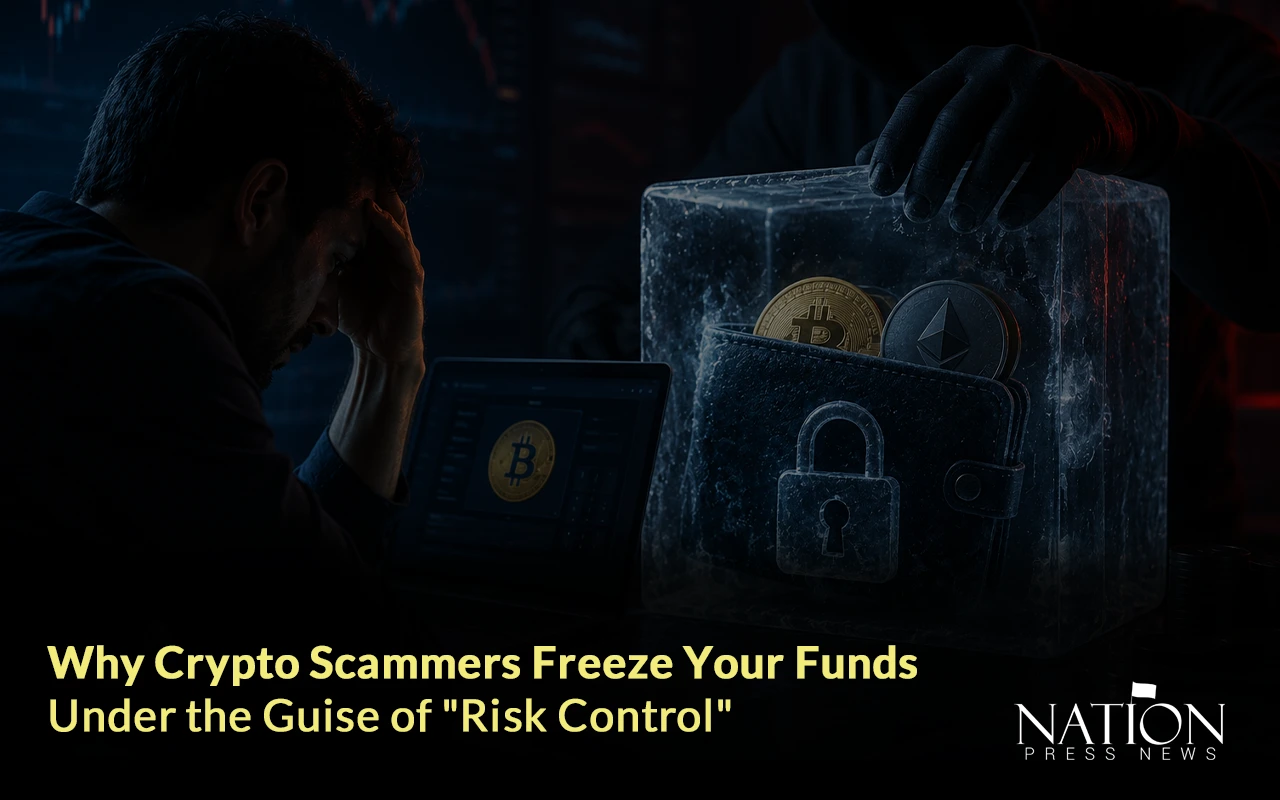
Then you hit withdraw, and instead of your money, you get a message: your account has been flagged for “risk control review.” Funds frozen. Pending verification.
And here’s the thing: it sounds official. It even sounds accountable, like a bank identifying questionable activity before it becomes an issue. That’s precisely the point.
It is not a borrowed practice, but rather a borrowed word.
Risk control is used by legitimate financial institutions. When banks see unexpected trends, such as a transfer that doesn’t match your history or a login from a different country, they freeze accounts.
It’s a legitimate, tedious, well-researched procedure that is in place to keep you safe. Scammers didn’t invent the term. They just picked it up because it already sounds legitimate and dropped it into a script that has nothing to do with actual risk management.
There’s no compliance team behind it. There’s no algorithm flagging anomalies. There’s just someone on the other end of a chat window, watching you get closer to withdrawing your money, and deciding to stop you.
Why “freezing” works better than an outright refusal.
If a platform just said “no, you can’t have your money,” most people would recognize that instantly for what it is.
But “your funds are temporarily frozen for security reasons” does something different; it keeps hope alive. It suggests this is fixable. Solvable. Just one more step away.
That’s the mechanism. Every scam like this depends on you believing the finish line is close, even as it keeps moving.
The fee always follows the freeze
Once the “risk control” message appears, a fee usually isn’t far behind. Sometimes it’s framed as an unfreezing charge. Sometimes it’s a “compliance deposit” or a “security bond” needed to prove the funds are legitimately yours. The number can be a flat amount or a percentage of your balance; either way, the promise is the same: pay this, and the freeze lifts. It rarely does.
More often, a new fee appears once the first one’s paid, then another, until either the money runs out or the person finally stops sending it. By then, the platform usually stops responding altogether.
The pattern to actually watch for
A few things separate real account holds from staged ones. Legitimate institutions freeze accounts without asking you to pay for the privilege of unfreezing them.
They also communicate through verifiable channels, not a single account manager in a chat app who happens to be the only person you can reach. And they don’t attach a countdown clock to your money, pushing you to “resolve this within 24 hours” before something worse happens.
If a freeze shows up right when you try to withdraw, and the only way through it involves a wire transfer or a crypto payment to some new wallet address, that’s not risk control. That’s the scam entering its next phase.
Once the money’s moved, tracing still matters
Crypto transactions feel anonymous, but they’re recorded permanently and publicly. That doesn’t guarantee recovery, but it does mean the money’s path isn’t invisible; investigators and forensic firms can often follow it from wallet to wallet, even when it’s been deliberately split up or routed through mixing services to obscure the trail.
The takeaway
“Risk control” is a phrase borrowed from a system that actually exists, wearing it as a costume. The real version never asks you to pay your way out of your own account. If you’re staring at a frozen balance and a fee request standing between you and your money, that fee is the scam, not the fix.